

Could your daily vape soon cost twice as much as it does today? The UK government has confirmed a massive shake-up for the industry, and the upcoming vape tax changes in 2026 are set to transform the price of every bottle and pod you buy. It is a worrying prospect for anyone who relies on vaping to stay away from cigarettes, especially with the introduction of a flat-rate Vaping Products Duty.
We understand that these new regulations feel like a penalty for making a healthier choice. You want clear answers on what you will actually pay at the till without the confusing legislative talk. This article explains exactly how the new duty affects your budget and provides a straightforward roadmap to help you navigate the transition.
We have put together a clear price comparison table, a timeline of the key dates you need to know, and expert advice on the hardware that will save you the most money. From maintenance tips for your coils to the long-term benefits of switching to refillable OXVA kits, we will help you stay prepared and keep your costs down as the rules change.
Key Takeaways
- The Vaping Products Duty launches on 1 October 2026, applying a flat-rate tax to all e-liquids regardless of their nicotine content.
- Understand how the volume-based tax structure means larger bottles like shortfills will see the most dramatic price increases at the till.
- See exactly how the vape tax changes will impact your daily spend, including an estimated £0.53 duty increase on standard 2ml disposables.
- Learn why switching to refillable pod systems like the OXVA Xlim series is the most effective way to keep your vaping affordable long-term.
- Get practical advice on using higher resistance coils to reduce your e-liquid consumption and make every bottle last longer.
The 2026 UK Vape Tax: What is Vaping Products Duty (VPD)?
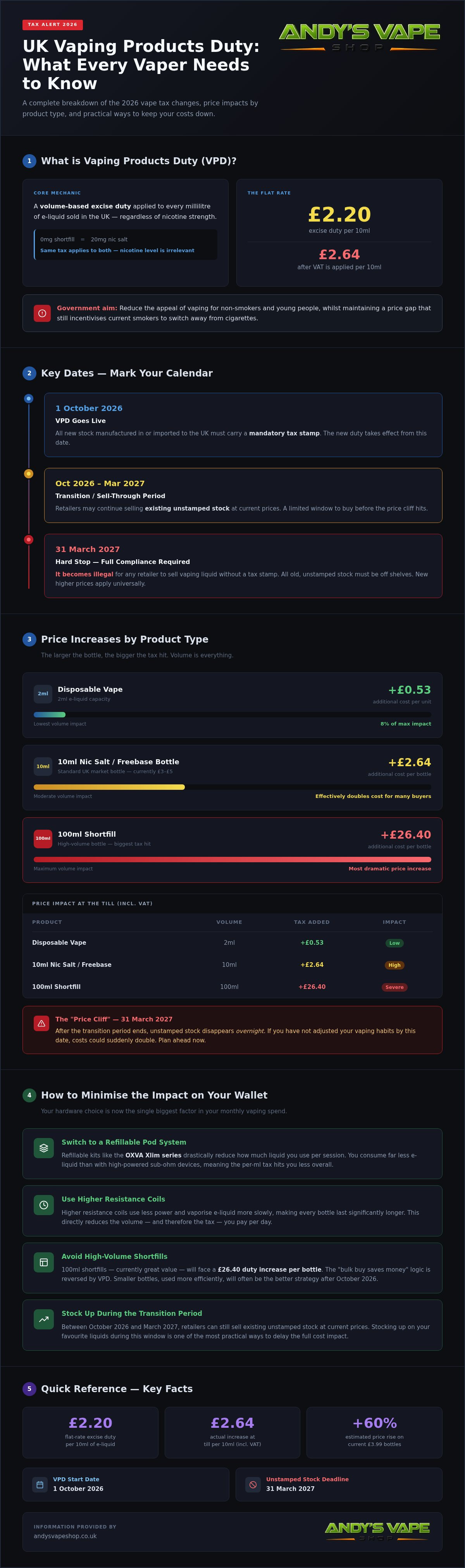
The UK government is introducing a significant shift in how vaping is regulated. Starting from 1 October 2026, a new excise duty called Vaping Products Duty (VPD) will be applied to every millilitre of e-liquid sold in the country. These vape tax changes represent the first time the government has taxed vaping products separately from standard VAT. It's a move that will affect every vaper in the UK, from those using simple disposables to enthusiasts with refillable kits.
VPD is a volume-based excise duty that ignores nicotine strength. This means you will pay the same amount of tax on a bottle of high-strength nic salt as you would on a nicotine-free shortfill. The flat rate is set at £2.20 per 10ml of liquid. However, because VAT is applied on top of this duty, the actual price increase you see at the checkout will be £2.64 per 10ml bottle. If you currently buy a 10ml bottle for £3.99, the new tax alone could push that price up by over 60%.
Why is the UK Government introducing this tax?
The primary goal is to reduce the appeal and affordability of vapes for non-smokers and young people. By increasing the entry price, officials hope to deter those who haven't smoked from picking up the habit. Simultaneously, the government wants to bring vaping duty more in line with tobacco taxation. They aim to maintain a price gap that still encourages current smokers to switch to vaping as a less harmful alternative, whilst ensuring the industry contributes more to public finances. It is a balancing act between public health goals and discouraging new nicotine users.
Key dates for your calendar
Keeping track of the timeline is essential for managing your costs. The rollout follows a specific schedule to allow the industry and consumers to adapt to these vape tax changes. You should keep the following dates in mind:
- 1 October 2026: The Vaping Products Duty goes live. From this date, all new stock manufactured in or imported to the UK must carry a mandatory tax stamp.
- The transition period: Retailers will have a limited window to sell through their existing, unstamped stock. This allows shops to clear shelves without immediate price hikes on older products.
- 31 March 2027: This is the hard stop. After this date, it will be illegal for any retailer to sell vaping liquid that does not carry a tax stamp.
Understanding these milestones helps you plan your purchases. Whilst there will be a brief period where older stock is available at current prices, the shift to the higher duty is inevitable. Preparing for these changes now will help you avoid a sudden shock to your wallet when the 2027 deadline arrives.
How Much More Will You Pay? Price Increases by Product Type
The math is simple: the more liquid in the bottle, the more you pay. Because this is a volume-based excise duty, the size of your purchase determines your tax bill. These vape tax changes mean that high-volume users will face the steepest price hikes. The government's choice to tax volume rather than nicotine strength is a deliberate strategy. It targets the sheer quantity of liquid consumed. Whether you use 20mg nic salts or 0mg shortfills, the taxman takes the same cut. This means your choice of hardware becomes the most important factor in your monthly spending.
Here is the breakdown of the additional costs you will see at the till after VAT is applied:
- 2ml Disposable: £0.53 increase.
- 10ml Bottle: £2.64 increase.
- 100ml Shortfill: £26.40 increase.
It's vital to prepare for the 31 March 2027 hard stop. Whilst you might find unstamped stock at current prices for a few months after October 2026, every retailer must legally switch to these higher prices once that grace period ends. This creates a "price cliff" where the old, affordable stock disappears overnight. If you haven't adjusted your vaping habits by then, your hobby could suddenly become twice as expensive.
The impact on 10ml Nic Salts and Freebase
Standard 10ml bottles are the backbone of the UK market. Most vapers pay between £3 and £5 per bottle today. Adding £2.64 in duty and VAT effectively doubles the cost for many. Multi-buy deals, like the popular 3 for £10 offers, will become impossible for retailers to maintain without massive price adjustments. If you want to understand the current landscape before the tax hits, check out our E Liquids UK: The Definitive Guide to find your best options whilst they remain affordable.
Why Disposables might feel the sting differently
Brands such as Elf Bar and Lost Mary will see a per-unit increase of roughly £0.53. While this sounds smaller than the jump for shortfills, it adds up quickly for daily users. Disposables already represent the least cost-effective way to vape. These vape tax changes make the "cost per ml" even more punishing. We expect a major shift toward refillable systems as vapers look for ways to protect their wallets. Switching to a refillable pod kit now is the smartest move you can make to stay ahead of the 2026 deadline. Browse our range of refillable vape kits to see how much you could save compared to disposables.
The End of the Free Nic Shot: Impact on Shortfills and Mixes
For years, shortfills have been the budget-friendly choice for sub-ohm vapers. By selling large bottles of nicotine-free liquid, manufacturers avoided many of the strict TPD regulations that govern 10ml bottles. This allowed you to buy 100ml of juice and add your own nicotine shots separately. However, the 2026 vape tax changes completely remove this financial advantage. The new Vaping Products Duty applies to all liquids regardless of their nicotine content.
Every millilitre inside that shortfill bottle is now subject to the same levy. Even the "Nic Shot" itself, usually sold in 10ml bottles, will attract the flat-rate duty. This means the era of cheap, high-volume vaping is effectively over. The government's volume-based approach ensures that the "nicotine-free loophole" is permanently closed. If you use a high-wattage device that burns through 20ml of liquid a day, your costs are about to spiral.
Calculating the new cost of a 100ml Shortfill
Let's look at the numbers. A 100ml bottle contains ten 10ml units. At a duty rate of £2.20 per 10ml, you are looking at a £22.00 tax bill before you even consider the product's base price. Once you add the 20% VAT on top of that duty, the total tax impact reaches £26.40. If you buy a premium shortfill for £15 today, that same bottle will likely cost over £40 in late 2026. This is a massive jump that will force many vapers to reconsider their daily setup and how they consume their favourite flavours.
Is mixing your own juice still viable?
Many enthusiasts turned to DIY mixing to save money. By purchasing bulk vegetable glycerine (VG), propylene glycol (PG), and concentrates, costs could be kept very low. Under the new definitions, these DIY bases and concentrates will also fall under the duty umbrella. Because the tax is based on volume rather than strength, the sheer amount of liquid used in DIY mixing becomes a financial liability. The savings that once made DIY attractive are being taxed out of existence.
You should start to organise your supplies and budget for these changes well in advance. The incentive to buy in bulk is disappearing. In many cases, it may actually become more convenient to switch back to high-strength 10ml bottles used in efficient pod systems. These systems use significantly less liquid per puff, which is the only way to truly minimise the impact of the new duty. Preparing for these vape tax changes now means you won't be caught off guard when the price of a large bottle nearly triples.
Practical Ways to Minimise the Impact on Your Wallet
You don't have to accept a massive increase in your monthly spending. While the vape tax changes are inevitable, how you react to them will determine your actual costs. The secret to keeping vaping affordable lies in efficiency. By choosing hardware and liquids that deliver the most satisfaction with the least amount of liquid, you can significantly offset the new duty. It is about working smarter, not just buying in bulk.
The most effective move is to ditch disposables immediately. While a single Elf Bar or Lost Mary might feel cheap now, the new tax makes them the most expensive way to vape on a per-millilitre basis. Moving to a refillable pod system allows you to buy 10ml bottles, which remain the most cost-effective format under the new rules. You should also consider your nicotine strength. Switching to 20mg nicotine salts allows you to satisfy your cravings with fewer puffs, meaning you use less liquid and pay less tax every single day.
Choosing the right hardware for tax efficiency
Hardware choice is now a financial decision. High-wattage sub-ohm tanks that create massive clouds are "liquid hungry" and will become a luxury under the new tax regime. Lower wattage devices, like the OXVA Xlim series, are designed for efficiency. These kits use less liquid per puff, which directly reduces your "tax per day". If you are currently a smoker looking to switch before the price hike, read our guide on the Best Vape Kits to Quit Smoking UK to find a setup that balances performance with long-term savings.
The importance of coil maintenance
A neglected coil is a waste of money. When a coil becomes burnt or inefficient, it fails to vaporise liquid properly, often leading to wasted juice and a poor experience. In a post-tax world, every drop of liquid is more valuable. Regularly replacing your coils ensures that you are getting the full value out of every millilitre you buy. To keep your kit running at peak efficiency, check out our maintenance tips in How Long Do OXVA Coils Last?.
Finally, you should organise a sensible stockpiling plan. Remember that while the duty starts in October 2026, retailers have until March 2027 to sell through their unstamped stock. This gives you a window to buy your favourite 10ml liquids and coils at current prices. Combine this with using higher resistance coils (1.2ohm or above), which naturally restrict liquid flow and extend the life of your bottle. Take control of your costs now by exploring our range of refillable vape kits and replacement coils to ensure you're ready for the transition.
Navigating the Changes with Andy's Vape Shop
Andy's Vape Shop remains committed to providing the best value whilst navigating these new UK laws. These vape tax changes represent a major shift for our community, but we're here to ensure you don't have to face them alone. We've spent years building a reputation as a grounded and reliable specialist. That won't change when the new duty arrives. Our mission is to keep your costs manageable by offering the most efficient hardware and high-quality liquids available. We stock a wide range of TPD-compliant 10ml liquids because they remain the most accessible and cost-effective option for the average vaper under the new regime.
Authenticity and compliance
Higher prices across the industry will likely lead to a rise in illicit, unstamped products appearing on the black market. Buying from a trusted UK retailer is the only way to ensure you're getting genuine, safe, and legal supplies. At Andy's Vape Shop, we only stock authentic brands like SKE, Elf Bar, and Lost Mary. Every product in our shop is fully TPD-compliant. We'll ensure all stock carries the necessary tax stamps once the mandatory deadline passes. We take our legal responsibilities seriously. This protects you from the risks associated with unregulated goods and ensures you're supporting a business that follows the rules.
Preparing for the transition
Don't wait until October 2026 to change your habits. We recommend that vapers start testing refillable kits now. Finding your favourite setup early saves you from making rushed decisions when prices eventually jump. Our focus on OXVA hardware is a deliberate choice. These kits are built for durability and designed to reduce liquid waste. This makes them the perfect tool for combatting the new volume-based tax. You can use our expert guides to learn how to maintain your device for the long term. Proper maintenance ensures every drop of taxed liquid is used effectively without being wasted on burnt coils.
If you're unsure which setup is right for your budget, contact our support team. We'll provide a no-nonsense recommendation on tax-efficient vaping tailored to your specific needs. We're vapers too; we understand the pressure these vape tax changes put on your wallet. Keep an eye on our blog for the latest announcements regarding duty-paid stock and price adjustments. We'll keep you updated as the government releases more technical details. Staying informed is the best way to keep your vaping journey affordable and enjoyable well into the future.
Prepare Your Setup for the 2026 Duty Changes
The upcoming vape tax changes don't have to mean the end of affordable vaping. By shifting your focus from high-volume disposables to efficient refillable kits, you can maintain control over your monthly budget. Remember that the new duty targets the volume of liquid you consume. Every millilitre counts. Prioritising hardware like the OXVA Xlim series and keeping your coils in top condition ensures you get the most value from every bottle you buy.
At Andy's Vape Shop, we provide UK-based specialist advice and genuine OXVA hardware to help you navigate this transition. We offer fast UK-wide delivery on all e-liquids and coils, ensuring you always have access to authentic, TPD-compliant supplies. Browse our range of refillable kits and prepare for 2026 today. Stay ahead of the deadline and make the switch to a more cost-effective setup. You've already done the hard work of quitting smoking; don't let new regulations stand in the way of your progress.
Frequently Asked Questions
When exactly do the UK vape tax changes start?
The new Vaping Products Duty officially launches on 1 October 2026. From this date, all new products manufactured in or imported into the UK must carry a mandatory tax stamp. However, retailers have a grace period until 31 March 2027 to sell through any existing unstamped stock. This means you might still find older stock at current prices for a few months, but every shop must legally switch to the higher taxed pricing by the spring of 2027.
Will nicotine-free e-liquids be taxed in 2026?
Yes, every millilitre of e-liquid will be taxed regardless of its nicotine strength. The UK government has designed the vape tax changes as a volume-based excise duty. This means nicotine-free shortfills, which previously avoided certain regulations, will now attract the same £2.20 per 10ml rate as high-strength nic salts. It's a significant change that removes the financial incentive for choosing zero-nicotine options over standard 10ml bottles.
How much will a 10ml bottle of e-liquid cost after the tax?
A standard 10ml bottle will see its price increase by exactly £2.64 once the duty and VAT are applied. While we cannot quote specific future retail prices, the tax alone is a substantial addition to the current cost of e-liquids. If you usually pay around £4.00 for a bottle today, that same product will likely cost closer to £7.00 after the new duty is implemented. This makes choosing efficient hardware more important than ever.
Can I still buy shortfills after the 1 October 2026 deadline?
You can still buy shortfills, but they will no longer be the budget-friendly option they are today. Because the tax is based on volume, a 100ml shortfill will attract £26.40 in total tax including VAT. This massive hike effectively triples the price of most large bottles. Many vapers may find that switching to high-strength 10ml bottles in a pod system becomes a much more affordable way to vape daily.
Are disposables like Elf Bar and Lost Mary affected by the new duty?
Yes, all disposable vapes including brands like Elf Bar and Lost Mary are subject to the new duty. Since most standard disposables contain 2ml of e-liquid, the tax increase will be approximately £0.53 per device after VAT. While this sounds small compared to the jump for larger bottles, disposables remain the least cost-effective way to vape. The cumulative cost of these daily increases will quickly add up for regular users.
What is the best way to save money on vaping after the tax increase?
The most effective way to save money is to switch to a refillable pod system like the OXVA Xlim. These devices are designed for efficiency, using far less liquid per puff than high-wattage tanks or disposables. You should also use higher resistance coils, such as 1.2ohm, to further reduce liquid consumption. Combining these vape tax changes strategies with higher nicotine salts allows you to satisfy your cravings while paying the least amount of duty.
Is the vape tax the same as the tobacco duty?
No, the Vaping Products Duty is a separate tax specifically for the vaping industry. However, the UK government has confirmed that tobacco duty will also increase simultaneously to ensure that vaping remains a cheaper alternative to smoking cigarettes. This strategy aims to encourage smoking cessation while still generating revenue from the vaping sector. It marks the first time the UK has applied a specific excise duty to non-tobacco nicotine products.
Will I need to pay the tax if I order vapes from abroad?
Yes, any vaping liquid imported into the UK after October 2026 will be subject to the new duty at the border. Customs will require the payment of the Vaping Products Duty and VAT before the goods can be delivered. Ordering from abroad will not allow you to bypass these costs, and you may face additional handling fees or have your items seized if the duty is not correctly declared and paid by the sender.